

AI Recommends Your Store. What Does That Mean for Your Business?
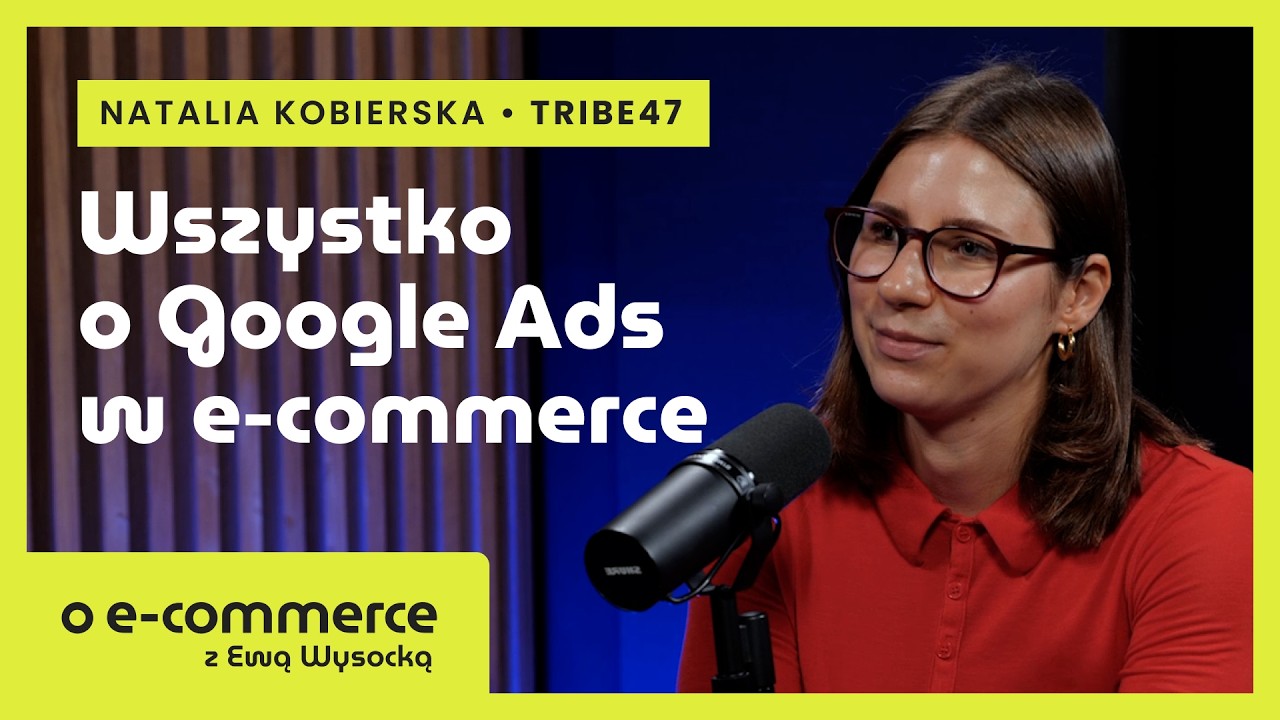
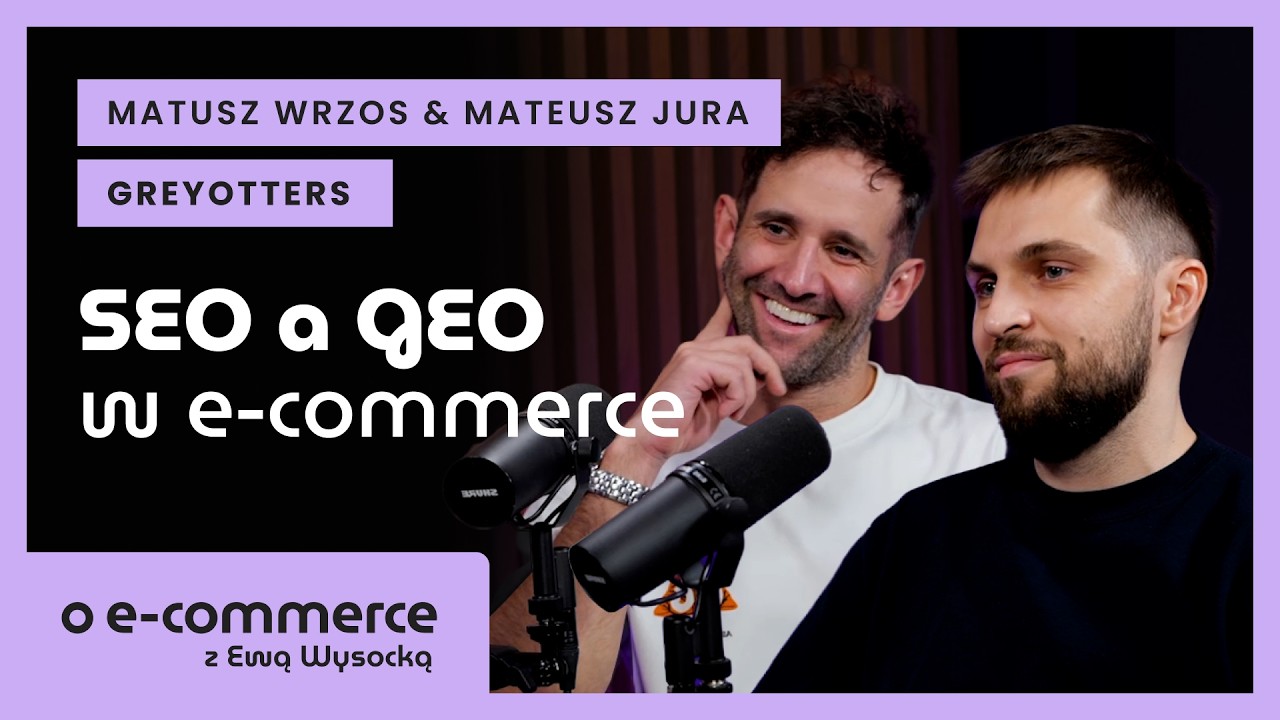
Expert commentary on episode #43 of the “O e-commerce” podcast, “SEO and GEO in E-commerce,” featuring Ewa Wysocka, Mateusz Wrzos and Mateusz Jura from Greyotters.
By Radosław Pietrzak, Head of Marketing Automation, tribe47.
In conversations about SEO and GEO, it is easy to focus on the hot topic of the moment: how do we get AI to recommend our brand? For me, though, an even more important question is what that recommendation actually changes for your business.
Your brand can appear in an AI-generated answer without winning a customer. You can also lose some blog traffic without seeing a proportional drop in sales. That is why I would approach GEO not as a race for another ranking position, but as a shift in the purchase journey: one we need to understand and learn to measure.
In the episode, Mateusz Wrzos and Mateusz Jura discuss both preparing content for AI and measuring this new kind of visibility. I would add one important distinction: a brand mention, a visit to your store and a purchase are three different things. We should not judge them by a single metric.
AI Visibility Is a Starting Point, Not Proof of Results
A screenshot of an AI recommendation is not enough to answer the question, “Are we visible in chatbots?”
It is worth checking which queries bring up your brand and what customer needs sit behind them. Is the AI recommending a specific product, or simply using your article as a source? Does it describe your offer accurately? Does it link to a page where the user can take the next step in the funnel?
These are different scenarios. Having a guide cited can build awareness, but a product recommendation in response to a specific shopping question serves a different purpose. Putting both in the same “GEO success” category makes it harder to judge what is genuinely worth investing in over the long term.
The research paper “GEO: Generative Engine Optimization,” presented at the KDD conference in 2024, illustrates this well. The authors studied the visibility of sources in generated answers, taking into account factors such as citation placement and how much of an answer drew on a given source. The reported visibility increase of up to 40% applied to the conditions of their study. It was neither a promise of higher sales nor a guarantee of results across every AI tool available today. [1]
My takeaway: I would start monitoring customer questions, not my own brand name. How do customers compare products? Which use cases do they ask about? Which limitations matter when they make a choice? Only then would I use that set of questions to track the presence of the store and its competitors.
Do Not Build a Separate World “for AI”
A new way of searching does not mean you need to throw away the SEO work you have already done for your business.
In its official documentation on AI Overviews and AI Mode, Google stresses that SEO fundamentals still apply. It does not require any special schema.org markup or an additional file “for AI.” A page must be indexed and eligible to appear in Google Search with a snippet. Meeting those requirements, however, does not guarantee inclusion in an AI-generated answer. These are the rules for Google’s features, not a universal playbook for every chatbot. [2]
So rather than starting by rewriting product descriptions at scale “for AI,” I would check the fundamentals: content accessibility, internal linking, up-to-date product information and whether structured data matches what the customer actually sees.
In practice, this means answering straightforward questions: who is the product for, what is it suitable for, what are its limitations and how does it differ from the alternatives on the market? “High quality” does little to help someone compare offers. Specific information about materials, compatibility or conditions of use does.
This is my business recommendation, not a promise that a model will cite your content. Better product information should help the customer, whether they arrive through a search engine, an ad, a newsletter or an AI chatbot.
Fewer Clicks Do Not Necessarily Mean Worse Results
The episode touches on the impact of AI Overviews on blogs. This is a good point to separate traffic from the value it brings.
If a user gets a simple answer directly in the search results, they may not visit your blog. A drop in sessions alone, however, does not tell you whether the store has lost a potential buyer or a visit that would previously have ended after someone read a definition.
That certainly does not mean you can ignore declining traffic. You need to check where the drops are happening: on guides, category pages or product pages. And you need to look at what is happening to orders and revenue.
There is also a specific measurement limitation. Google states that results from AI Overviews and AI Mode are included in the overall Search Console data, within the Performance report for the “Web” search type. Traffic from these features should therefore not all be treated as a separate chatbot referral source. Google recommends supplementing Search Console data with conversion and behavioral measurement in tools such as Google Analytics. [2]
I would also be cautious about high conversion rates from AI traffic when the sample is small. A handful of purchases from a small number of visits is not enough to justify reallocating budget. What matters is scale, order value and whether the results hold up over time.
Three Things I Would Start With
- Establish a baseline. Check which visits from identifiable AI sources you can see today, along with the purchases attributed to them. Keep these separate from Google Search data. Do not treat this measurement as the full picture of how AI influences a customer’s decision.
- Test within a clearly defined scope. Choose a category, a set of shopping questions and a group of products. Record the tool, the date and the conditions of each check. Improve the information and monitor the answers over time. A single favorable result does not prove a lasting change or establish that your optimization caused it.
- Separate visibility metrics from business metrics. Appearing in answers shows exposure. Visits, orders and revenue describe the stages that follow. An increase in one metric does not automatically mean an increase in the others.
GEO does not need a separate world where success is measured solely by the number of mentions. It needs a place in your customer acquisition strategy.
The most important question, then, is not “Does AI mention us?” but “Does it help the right customer choose our offer, and what can the data actually tell us about that?”
Sources
“O e-commerce” podcast, episode #43: “SEO and GEO in E-commerce,” featuring Ewa Wysocka, Mateusz Wrzos and Mateusz Jura (Greyotters). YouTube | Spotify
[1] Aggarwal et al., “GEO: Generative Engine Optimization,” KDD 2024. Original research paper.
[2] Google Search Central, “AI features and your website.” Official Google documentation.